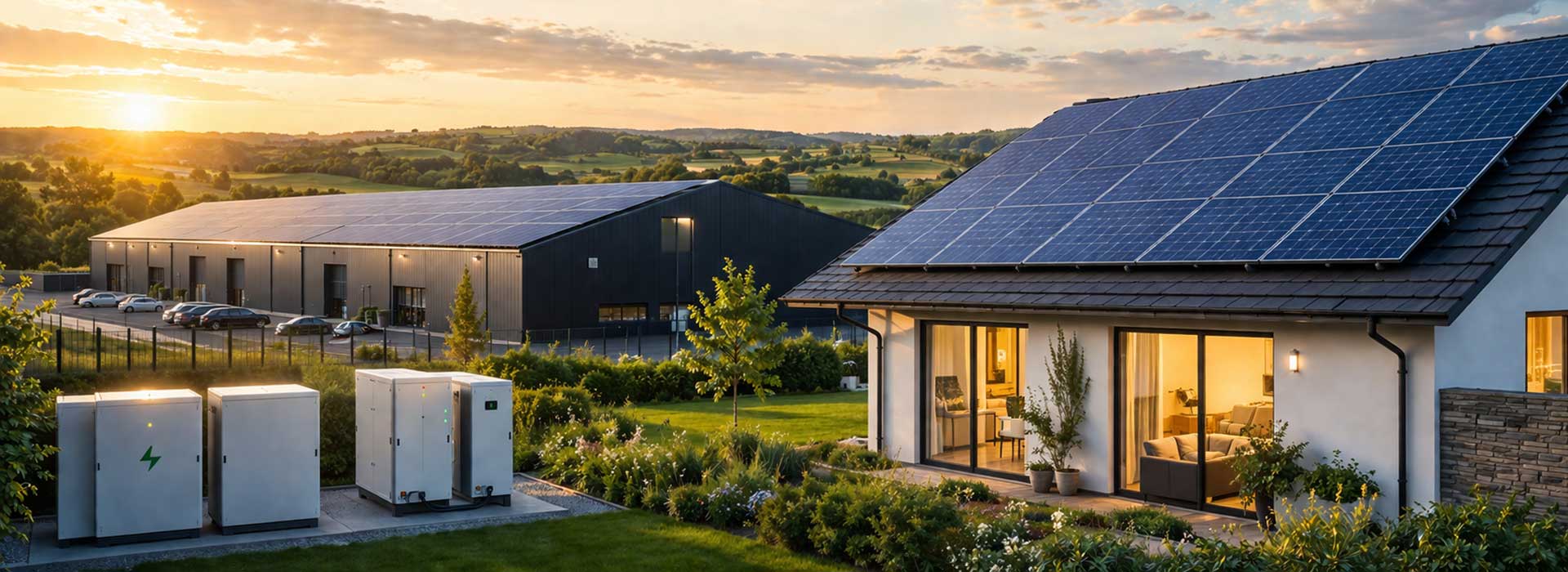
Why solar systems need proper insurance
Solar panels are a long-term investment, but they are not risk-free. They sit exposed to weather, depend on electrical components, and in many cases form part of a wider energy system. Whether on a home or a commercial building, damage or failure can lead to repair costs, disruption, and in some cases lost income or increased energy bills.
Insurance is therefore less about the panels themselves and more about the role they play. A domestic system may reduce household costs, while a commercial installation may support production or reduce peak demand. In both cases, the impact of a failure can be wider than expected.
Domestic solar: how cover typically works
For homeowners, solar panels are usually treated as part of the building. If installed correctly and declared to the insurer, they are often included within standard buildings insurance.
Cover may include:
- Storm or impact damage to panels
- Fire or electrical faults
- Theft or vandalism
- Damage to inverters and associated equipment
However, this is not automatic. Some policies require notification when panels are installed, particularly if the system includes battery storage. It is also important that the insured value reflects the cost of replacing the system, not just the original property value.
For general consumer guidance, resources such as Citizens Advice can help explain how home insurance policies typically work and what to check when making changes to your property.
Commercial and industrial installations
Business solar systems are often larger and more integrated into day-to-day operations. They may be roof-mounted across warehouses, installed on agricultural land, or combined with battery storage to manage energy use.
Insurance in these cases may sit across several areas:
- Property damage insurance for physical loss or damage
- Engineering or plant cover for mechanical and electrical failure
- Business interruption insurance for loss of income or increased costs
The key difference from domestic systems is the potential financial impact. If a system fails, the cost is not just repair — it may include higher energy bills, reduced output, or operational delays.
Where systems are used to manage demand or reduce reliance on the grid, design and usage become just as important as insurance. You can explore this in more detail in our guide to managing power systems.
Industry guidance from organisations such as the Association of British Insurers can provide useful background on how commercial risks are assessed and insured.
Battery storage and evolving risks
Battery storage is becoming more common in both homes and businesses. While it improves flexibility, it also introduces additional considerations. Batteries involve different risks to panels, particularly in relation to overheating, fire, and system management.
Insurers may ask for:
- Details of the battery system and capacity
- Confirmation of compliant installation
- Information about where the equipment is located
In some cases, the presence of batteries can affect premiums or policy terms. That does not make cover difficult, but it does mean the system must be clearly declared and understood.
Technical standards and installation practices are often guided by organisations such as the Microgeneration Certification Scheme (MCS), which helps ensure systems meet recognised requirements.
Installation, maintenance, and policy conditions
Most insurance policies rely on the system being installed and maintained properly. Poor installation or lack of upkeep can lead to reduced payouts or declined claims.
It is sensible to:
- Use qualified, accredited installers
- Keep all certification and documentation
- Follow recommended maintenance schedules
- Record any changes or upgrades to the system
For businesses, this may form part of a wider risk management approach. Guidance from bodies such as Health and Safety Executive (HSE) can also be relevant where electrical systems and workplace safety overlap.
Understanding common exclusions
Insurance is as much about what is not covered as what is included. Common exclusions for solar systems may include:
- Gradual wear and performance degradation
- Faults caused by poor installation
- Undeclared modifications or upgrades
- Lack of maintenance
For commercial policies, there may also be limits on business interruption claims or conditions around repair times and system reinstatement.
Reading the policy wording carefully is essential. If anything is unclear, it is better to clarify in advance than rely on assumptions later.
A practical way forward
Solar systems are now a normal part of both domestic and commercial properties. Insurance does not need to be complicated, but it does need to reflect how the system is used and what it would cost to repair or replace.
For homeowners, the priority is usually ensuring the system is declared and correctly valued. For businesses, it extends further into operational impact and continuity planning.
In some cases, understanding how your system is designed and used can reduce both risk and long-term cost. For a more detailed look at how solar, storage, and electricity demand interact in practice, see this power and energy information website.

